
Beyond tools: Building systems that think
I was tired of renting software. For years, I'd paid for a host of standalone apps: a run tracker, a meal logger, a task manager: none of which talked to each other. I thought of Mo Gawdat, the former Google X executive, describing how he runs his startup today: 'My CTO is an AI; my chief of staff is an AI; my project management is AI.' Not hypothetically. Not 'in the future.' Right now. I wasn't quite there yet, but the idea of building my own interconnected system was taking hold.
In a recent Diary of a CEO interview, Mo laid out a stark reality: entry-level knowledge work is disappearing, and we're heading toward a world where everyone needs their own AI operating system: not just access to ChatGPT, but personally built systems that understand their context, their work, their life.
I'm not quite there yet. But I've stopped renting a host of standalone software tools for my personal life and business admin. I built my own instead. This is now possible for almost anyone, and here's why you might need to.
The SaaS Trap
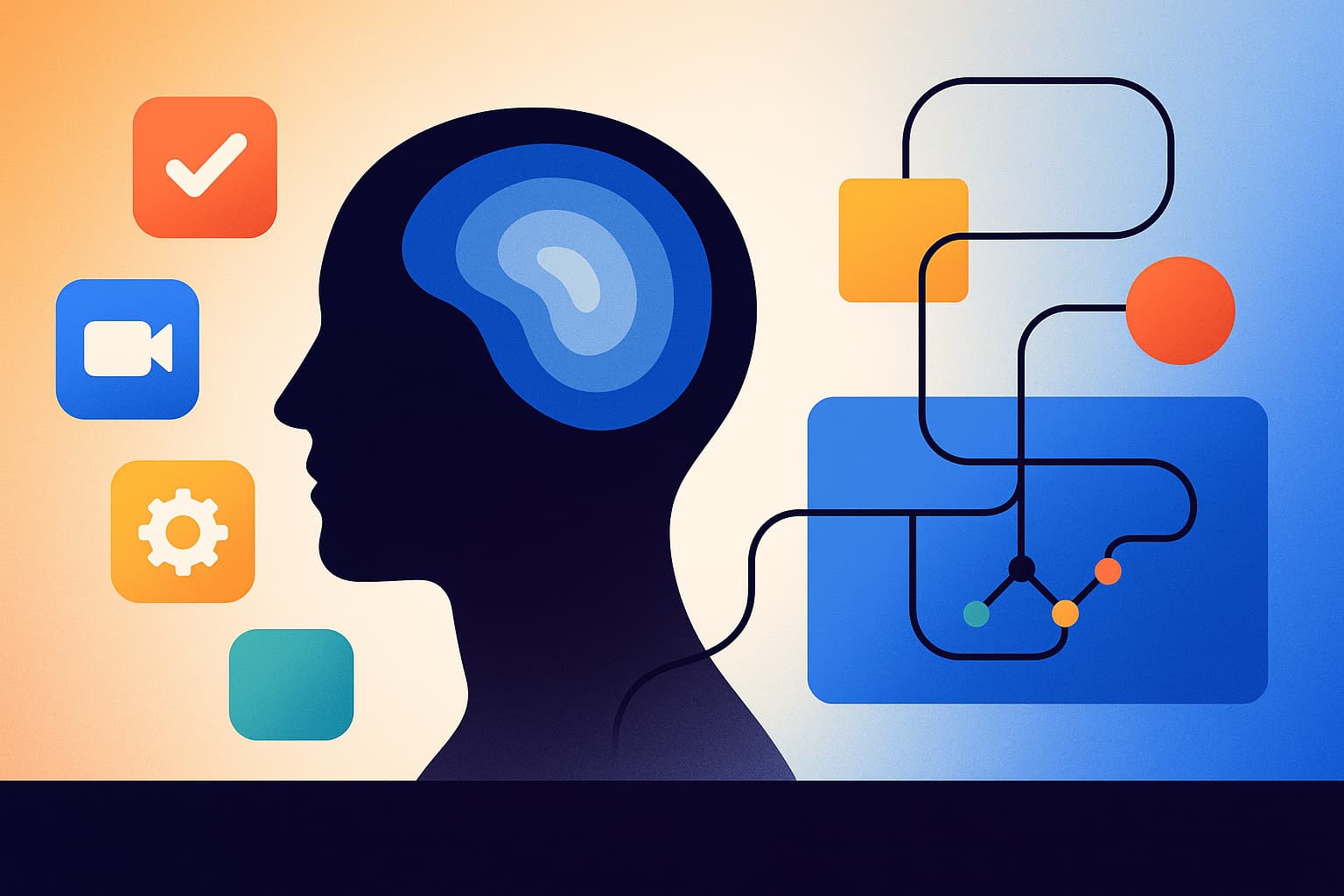
Before this shift, I was here:
I was renting a host of standalone software tools for health tracking, side projects, and day-to-day life admin. Each one solving a single problem.
None of them talking to each other. None of them understanding the bigger picture of how I actually work.
Death by a thousand subscriptions. Workflows that never quite fit. Generic tools built for everyone, which meant they were perfect for no one.
The kicker: they all wanted me to adapt to their way of doing things. I molded my habits to fit their features, not the other way around.
The First System: A Gym Tracker
I didn't set out to build an empire. I just wanted to stop renting standalone software for my health tracking. So I built a gym tracker. Basic functionality: log workouts, track eating habits, add notes. What I learned: Building a proof of concept and fleshing it out was way easier than I expected.
This wasn't some grand architectural masterpiece. It was a simple app that did exactly what I needed: nothing more, nothing less. And because I built it, I could add whatever I wanted. Custom views. My own metrics. Notes that made sense to me, not some product manager in California.
The barrier wasn't technical skill; it was believing I could.
The Expansion: From Health to Business
Once I'd proven it worked for health tracking, the natural question became: What else am I overpaying for? My side projects and day-to-day life admin also relied on rented software.
I took the same approach: build a basic version, use it, improve it. And because I already had my health data in my own system, I could start connecting data points that no off-the-shelf SaaS would ever link.
I never looked back.
Why? Because I could build bespoke views I actually wanted to see. I could connect my existing data. I could evolve the system as my needs changed, not wait for a product roadmap or beg for features in a forum.
Most importantly: I owned it. My data. My workflow. My rules.
Systems That Think: The Real Advantage
Here's where it gets interesting.
This isn't just about replacing tools. It's about building interconnected systems that understand your context across multiple domains.
Imagine a system that could connect those dots: logging a hard gym session and a long run, and then suggesting a recovery day based on your effort levels, perhaps even recommending a sauna and cold plunge.
Few standalone fitness apps do that. Few generic SaaS tools connect those dots.
My system integrates context from multiple paradigms: my effort levels, my project work, my daily rhythms. The challenge, as I found, was segregating these contexts effectively, rather than letting them mix and obscure important details.
When your tools exist in silos, they can't see the whole picture. When your system is unified, it thinks with you, not at you.
What Changed: AI as Co-Builder
Why is this possible now when it wasn't five years ago?
AI makes building accessible.
You don't need a team of developers, massive funding, or years of experience. You need a clear understanding of the problem you're solving, a willingness to experiment, and an AI pair programmer (Cursor, Claude, whatever).
The barrier is no longer technical skill. It's knowing what you actually need.
And that's something only you can figure out: not a SaaS vendor, not a product manager, not a consultant.
The Real Barrier: Deployment & Security
There's still a gap.
Most people can now use AI to build an app. The code isn't the problem anymore.
The real problem, for many, is deployment and security.
How do you actually ship this thing? How do you access your data from anywhere, keep it secure, back it up, and make sure it doesn't break when you're on holiday?
I self-host everything on my own infrastructure and use Tailscale to access it securely from anywhere. But I'm technical. That's my comfort zone.
For most people, the answer is:
- Vercel for hosting (dead simple, scales automatically)
- Supabase for the database (PostgreSQL with auth and APIs built in)
These are what AI coding tools suggest by default now. And honestly? They work. They handle the hard stuff: security, backups, and scaling, so you can focus on building what you need.
This is where most people would struggle. But this gap is closing fast.
Who This Is (and Isn't) For
Let's be clear: this isn't for everyone.
If you just want to get going, need something now, and don't care about customization, pay for SaaS and move on. There's no shame in that.
But this is for you if:
- You're tired of adapting to someone else's workflow
- You want systems tailored exactly to how you think
- You value owning your data and your process
- You're willing to invest time upfront for long-term control
The competitive advantage is shifting. It's no longer about "what tools do you use?" It's about how well your systems fit you.
And when you build your own, they fit perfectly.
The Bigger Picture: Mo's Warning
Remember Mo Gawdat, the guy with the AI CTO?
He's not painting a pretty picture of the next few years. He predicts serious job disruption starting in 2027: not blue-collar work, but entry-level knowledge work. Call centres. Assistants. Analysts. The stuff you can do "with a few clicks."
And it goes further than you think. Paralegals. Financial analysts. Even middle management.
His warning: The survivors will be those who can build their own systems.
We're not heading toward a world where everyone uses ChatGPT. We're heading toward a world where everyone has their own AI operating system: systems that know their work, their data, their patterns.
Those who can't build their own will be stuck using someone else's. And that means:
- Someone else's rules
- Someone else's pricing
- Someone else's control over your data
- Someone else's vision of how you should work
For me, the choice is clear: I'd rather own my operating system.
Where This Goes
I'm not done. I'm barely started.
My vision: keep adding functionality. Make my system smarter. Let it understand more about how I work, how I think, how I live.
I want to chat extensively with it. I want it to know me well enough that it can anticipate what I need before I ask.
And I want more people to adopt this flow. Not because I'm selling something, but because I think this is where we're all headed anyway.
Software is becoming personal again. Like personal computers in the 80s: built for you, not for the masses.
And that's a good thing.
Getting Started
If this resonates, here's how to start:
1. Pick one expensive SaaS tool that doesn't quite fit your needs. Don't try to rebuild everything. Start small.
2. Build a proof of concept in a few hours. Use AI. Use Cursor. Use Claude. Get something basic working.
3. Use it. Improve it. Don't aim for perfection. Aim for "good enough to replace the thing I'm paying for."
4. Let it expand naturally. Once you've proven it works, you'll see other places to apply the same approach.
5. Remember: The skill isn't coding anymore. It's understanding what you actually need. That's the hard part. And only you can do it.
The Choice Ahead
You're already living through the shift Mo describes. The question isn't whether this is happening.
The question is: Will you build your own system, or use someone else's?
I've made my choice. I'm building.
I'm not going back.
Want to discuss this further? Reach out on LinkedIn or Twitter. I'd love to hear what you're building.
Found this helpful? Share it!
Enjoyed this post? Subscribe to my newsletter for more insights on web development, career growth, and tech innovations.
Subscribe to NewsletterRelated Posts
The AI I taught to stay silent
This piece explores the counter-intuitive challenge of building an AI assistant designed for silence, rather than constant responsiveness. It details how a WhatsApp-based order system for small food producers was redesigned to be invisible until explicitly triggered, ensuring it supports human interaction without interruption.

⚡ Blazing-Fast TypeScript: A 10x Leap in Developer Experience
An in-depth exploration of TypeScript's new native compiler, Project Corsa, and how its 10x performance improvement is set to transform the frontend development landscape.
Embracing the Future: A Deep Dive into Tech's Latest Innovations
A journey through cutting-edge tools and breakthroughs powering modern software development, with practical insights and real-world applications.